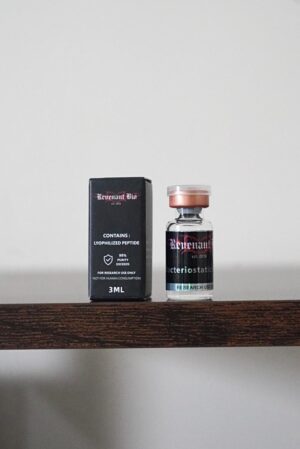
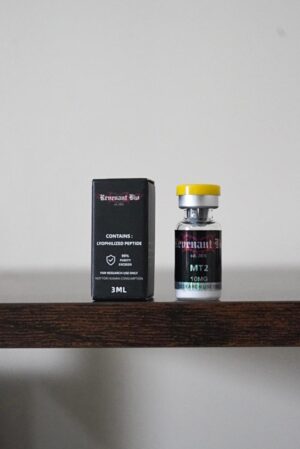
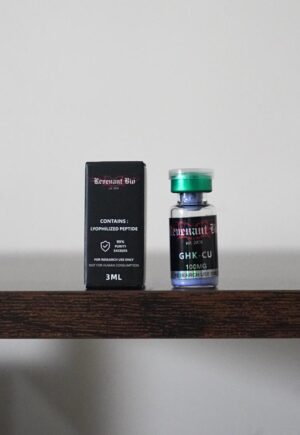
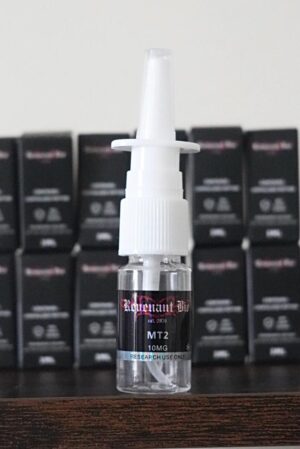
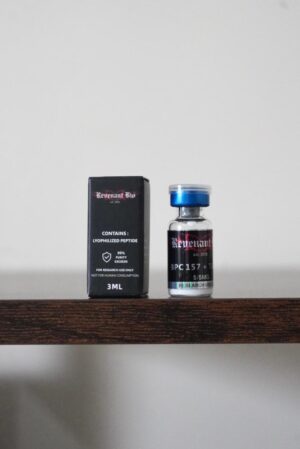
This Product contains 80mg Klow stack blend, and has undergone testing , with results showing :
50.65mg -GHK ( Glycyl-L-Histidyl-L-lysine )
12.61mg – BPC 157
11.9mg – TB500
11.21mg – KPV
(Testing proof is avaliable on the TESTING page )
Preclinical Animal Research – KLOW Stack Blend
(BPC-157 + TB-500 + GHK-Cu + KPV)
Overall Combination Status (Important Context)
Study objective (meta-context)
To date, there are no controlled animal or human studies evaluating the combined administration of all four peptides (BPC-157, TB-500, GHK-Cu, and KPV) as a unified therapeutic stack.
Instead, the “KLOW stack” is a theoretical multi-pathway construct derived from independent preclinical research on each peptide’s individual effects:
All combination effects are therefore extrapolated, not experimentally validated as a stack.
⸻
Component Preclinical Evidence
1. BPC-157 – Rat Gastrointestinal & Soft Tissue Injury Models
Study objective
Researchers evaluated BPC-157 in rodent models of gastrointestinal injury, tendon damage, and ischemic tissue damage, focusing on cytoprotection and repair acceleration.
BPC-157 was administered systemically (intraperitoneal and oral routes in select studies).
Measured outcomes included:
* Ulcer size reduction
* Tissue histology and epithelial integrity
* Vascular density in injured tissue
* Functional recovery in tendon injury models
* Survival in severe ischemic injury models
⸻
Results
Across models, BPC-157 produced:
* Significant reduction in gastric lesion size and severity
* Accelerated healing of intestinal fistulas and mucosal defects
* Improved epithelial regeneration and barrier restoration
* Enhanced microvascular formation in damaged tissue
* Faster functional recovery in tendon injury models
* Reduced fibrotic disorganisation in healing tissue
3. GHK-Cu – Rat Wound Chamber Model (Connective Tissue Regeneration)
Study objective
To evaluate GHK-Cu effects on extracellular matrix formation and wound repair signalling in controlled rat injury systems.
⸻
Methods
Rats received subcutaneous wound chambers and were treated with GHK-Cu.
Researchers measured:
* Collagen and protein synthesis
* DNA content (cell proliferation marker)
* Elastin and glycosaminoglycan content
* Gene expression (collagen I & III mRNA)
* Tissue dry mass and regeneration rate
⸻
Results
GHK-Cu produced:
* Increased collagen synthesis and extracellular matrix deposition
* Elevated cell proliferation markers (DNA content increase)
* Upregulated collagen I and III gene expression
* Increased glycosaminoglycan and dermatan sulfate content
* Enhanced overall wound tissue regeneration
Notably: strong shift toward matrix remodelling and structural repair signalling.
To evaluate KPV (lysine-proline-valine), a tripeptide derived from α-MSH, in inflammatory suppression models, particularly gut epithelial and immune signalling systems.
* NF-κB inflammatory signalling activity
* Cytokine release (IL-6, TNF-α in model systems)
* Epithelial barrier integrity markers
⸻
Results
KPV demonstrated:
* Suppression of NF-κB mediated inflammatory signalling
* Reduced pro-inflammatory cytokine expression in model systems
* Improved epithelial barrier stability in injury conditions
* Dampening of acute inflammatory cascade activation
Core effect: anti-inflammatory modulation via innate immune signalling pathways.
Across all individual peptide studies, the KLOW stack components collectively demonstrate:
* Enhanced tissue repair signalling in multiple organ systems (GI, skin, tendon, cardiac)
* Increased angiogenesis and vascular remodelling in injury environments
* Modulation of inflammatory response pathways
* Acceleration of cell migration and extracellular matrix reconstruction
However:
* There is no in vivo evidence validating additive or synergistic effects of the four peptides combined
* All stack-level conclusions remain mechanistic extrapolations from single-agent studies only